
Erick Tu
Best Stripe Alternatives in 2026: Our Top Picks
Stripe has become the go-to name in online payments, powering everything from indie SaaS startups to billion-dollar marketplaces. But it's not always the right fit. You might be dealing with merchant account limitations, getting blocked because of your industry, or just wanting clearer pricing without surprise fees. Plenty of businesses hit these walls and start looking for something that works better for their specific situation.
If you’re a mid-market or online business that’s outgrown Stripe or you operate in a higher-risk or specialized sector that Stripe won’t support, then this guide is for you. We’ll cover seven strong payment solutions that address the gaps Stripe can’t fill.
The Big Picture: Why Switch from Stripe?
Stripe works great until it doesn't. Here's what usually pushes businesses to look elsewhere:
Limited control over the merchant account – Stripe is a payment facilitator (PayFac). You're sharing an aggregate merchant account with thousands of other businesses. When Stripe decides to hold funds or suspend your account, there's not much you can do about it.
Restrictions for high-risk or specialized industries – Operating in nutraceuticals, CBD, subscription boxes, adult services, or other "elevated risk" sectors? Stripe might decline you outright or pile on restrictions that make processing difficult.
Fees and payout delays – The base pricing looks clean: 2.9% + $0.30 per transaction. But currency conversion, dispute handling, advanced fraud protection, and payout holds add up fast. Some businesses get caught off guard by how much these extras cost.
Scaling complexities – When you're processing serious volume or expanding internationally, Stripe's standardized approach starts feeling restrictive. You need custom routing, dedicated support, or enterprise-level flexibility that the platform wasn't really built for.
Here's some context on Stripe itself: it's the industry standard for a reason. Clean developer experience, fast setup, excellent documentation. Most businesses can start accepting payments within a few hours if they pass risk screening. The API is genuinely good, and features like subscriptions, invoicing, and payment links work smoothly out of the box.
The tradeoff, however, is the lack of control and flexibility. You’re on Stripe’s terms: their combined account, their risk tolerances, their fee structure. If the limitations above are hurting your business, it’s a sign to explore alternatives that are designed to solve those specific issues.
Our Methodology
We picked these six alternatives based on what matters when you're outgrowing Stripe or need more control:
Merchant Account Control – Do you get a dedicated merchant account, or are you still aggregated with others? (Important for stability and negotiating your own terms.)
Global Reach – Can the platform process multiple currencies and payment methods in your key regions without exorbitant fees?
Recurring Billing & Subscriptions – Does it handle complex billing cycles, subscription management, dunning (failed payment recovery), etc., as smoothly as or better than Stripe?
API Flexibility & Integration – Are the developer tools robust and modern? Will your engineering team be as comfortable integrating it as they were with Stripe’s API?
Target Business Size/Use Case – Is the solution built for small businesses, mid-market, or enterprises? Does it specialize in any industries or models (e.g. high-risk sectors, marketplaces, SaaS)?
Each company on our list shines in different areas. Some cater to high-risk industries Stripe won’t touch, others excel at enterprise-scale needs, and a couple offer models (like Merchant of Record) that offload heavy compliance burdens. We’ll note these distinctions so you can match the solution to your specific situation.
Quick Comparison Table
Company | Model | Dedicated Merchant Account | High-risk Friendly | Global (multi currency) | MoR | Marketplaces/ Platforms | Subscriptions |
|---|---|---|---|---|---|---|---|
Stripe | PayFac (aggregate) | ❌ | ❌ | ✅ | ❌ | ✅ | ✅ |
Sensapay | All-in-One Solution | ✅ | ✅ | ✅ | ❌ | ❌ | ✅ |
Adyen | Enterprise acquirer | ✅ | ⚠️ (case by case) | ✅ | ❌ | ✅ | ✅ |
Authorize.net | Gateway (+ optional account) | ⚠️ (if bundled) | ❌ | ✅ | ❌ | ❌ | ✅ (basic) |
PayPro Gobal | Merchant of Record (MoR) | ❌ | ❌ | ✅ | ✅ | ❌ | ✅ |
PayPal | PayFac / wallet | ❌ | ❌ | ✅ | ❌ | ❌ | ✅ |
Braintree | PayFac (PayPal-owned) | ❌ | ❌ | ✅ | ❌ | ✅ | ✅ |
PaymentCloud | High-risk merchant provider | ✅ | ✅ | ✅ | ❌ | ❌ | ✅ (via gateways) |
Sensapay
Website: sensapay.com
Company Overview
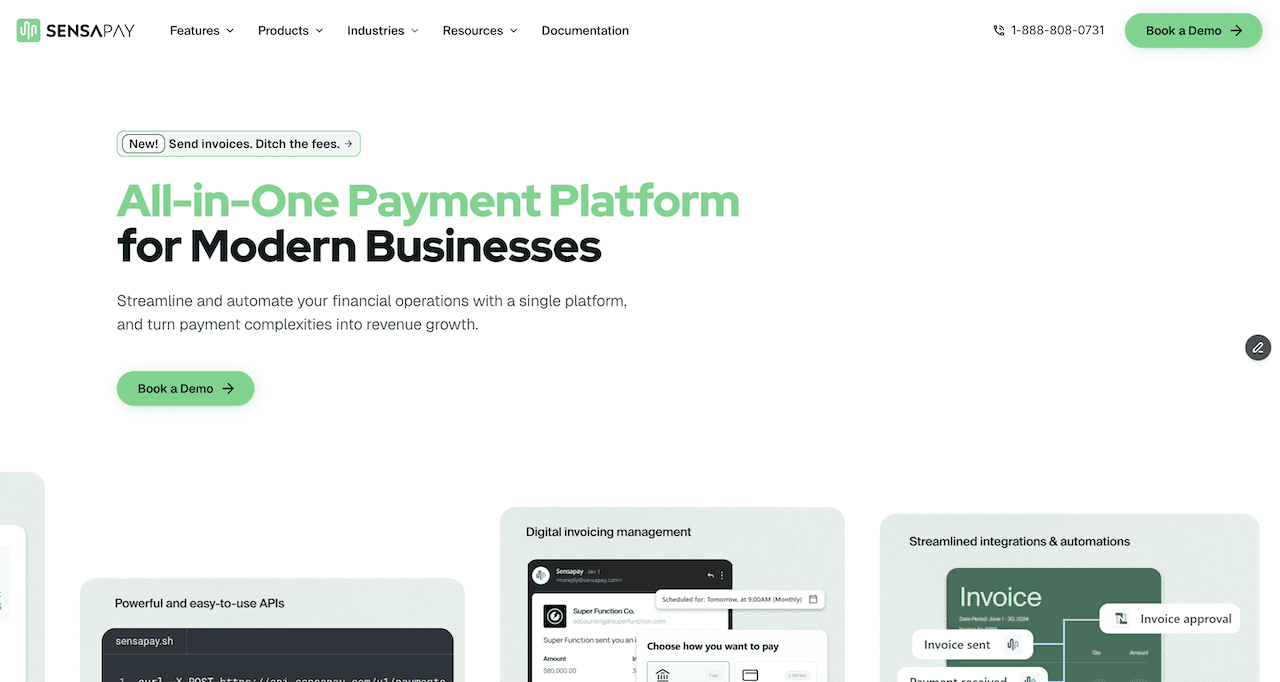
Sensapay builds payment infrastructure for businesses that need flexibility and transparency, especially in industries that typically get rejected. Instead of throwing you into an aggregate merchant account, they set up dedicated accounts with underwriting tailored to your business model. More control, fewer surprise holds.
Key Strengths
High-risk expertise – They actually work with industries most processors won't touch. Nutraceuticals, CBD, subscriptions, adult services - Sensapay has dedicated underwriting teams that understand these business models instead of auto-declining them.
Transparent pricing – The rate structure is clear upfront. No hidden fees buried in the fine print that show up on your statement later.
Unified platform – You get online checkout, mobile payments, payment links, ACH transfers, subscriptions, and in-person terminals all in one place. Manage everything from a single dashboard instead of juggling multiple providers.
Pros
Dedicated merchant accounts mean you're not sharing risk with thousands of other businesses. Less likely to get suddenly suspended.
Strong fraud detection and risk management built in
Flexible recurring billing that handles complex subscription models
Fast underwriting with actual humans you can talk to
Cons
Smaller brand compared to Stripe or Adyen (though they're growing quickly)
Onboarding is more hands-on. You're not getting instant signup - there's an actual approval process.
Best Suited For
SMBs and mid-market businesses in standard or high-risk industries. If you've been declined by other processors or you're tired of dealing with aggregate account restrictions, Sensapay is built specifically for your situation.
Adyen
Website: adyen.com
Company Overview
Adyen powers payments for Uber, eBay, Spotify, Microsoft - basically the big players. They've built a unified platform that handles online, in-store, and mobile payments with direct acquiring relationships in 20+ markets. This is enterprise-grade infrastructure designed for scale.
Key Strengths
Unified commerce – Everything runs through one integration. Web, app, point-of-sale, all pulling from the same data. Your customers get a consistent experience, you get simplified reconciliation.
Global acquiring – Adyen owns the acquiring infrastructure in major markets instead of relying on third parties. This cuts down cross-border fees and gives you more control over routing.
Data-driven optimization – You get access to deep transaction data and analytics that help improve authorization rates and catch fraud patterns early.
Pros
Enterprise reliability. This platform handles massive transaction volumes without breaking.
Advanced features: network tokenization, smart payment routing, revenue optimization tools
Strong compliance infrastructure (PCI DSS Level 1, keeps up with local regulations globally)
Cons
Complex setup. You'll need dedicated development resources to integrate properly.
Pricing is custom (usually interchange-plus with monthly fees) and can get expensive for smaller businesses
Onboarding takes weeks. This isn't a "sign up today, process tomorrow" situation. Expect thorough KYC and setup processes.
Best Suited For
Mid-market to enterprise companies processing millions annually. If you're running a marketplace, large eCommerce operation, or hybrid retail business that needs omnichannel capabilities and global reach, Adyen has the infrastructure to support it.
Authorize.net
Website: authorize.net
Company Overview
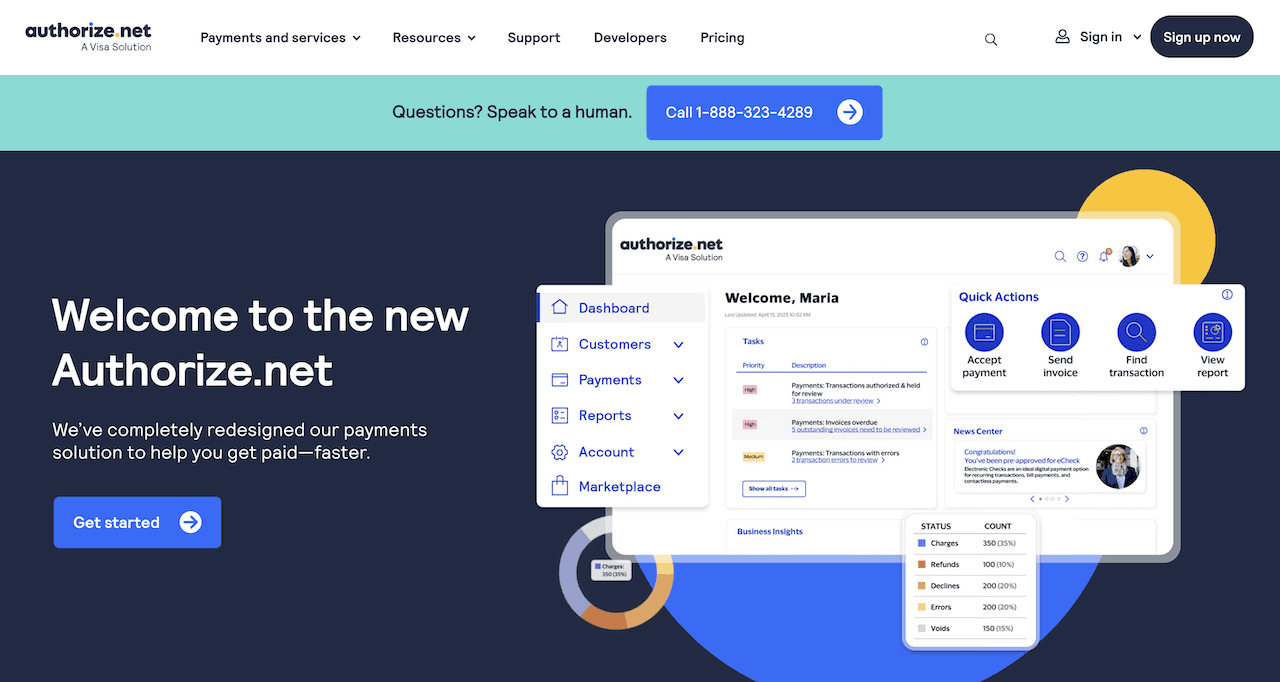
A veteran in the payment gateway space, Authorize.net is one of the most widely accepted and integrated gateways. It’s a reliable workhorse, but it's crucial to understand it's primarily a gateway, not a full-stack processor. You often need a separate merchant account to use it.
Key Strengths
Reliability and stability – As a long-standing player, it's known for its uptime and stable API.
Extensive integrations – Supported by thousands of shopping cart plugins, CRM systems, and business software. If an app accepts payments, it likely supports Authorize.net.
All-in-one option available – For simpler needs, they offer a combined gateway and merchant account solution, simplifying the setup.
Pros
Highly reliable and predictable.
Vast ecosystem of plugins and partners makes it easy to add to existing platforms.
Strong fraud detection suite (Advanced Fraud Detection Suite) included.
Cons
Can be more expensive when you factor in both gateway ($25/month) and merchant account fees.
API and user interface feel dated compared to modern platforms like Stripe.
Lacks the all-in-one developer experience and modern features of newer entrants.
Best Suited For
Small to medium-sized businesses using established platforms like WordPress/WooCommerce or older legacy systems that require a reliable, universally-supported gateway. It's a solid choice for stability over cutting-edge features.
PayPro Global
Website: payproglobal.com
Company Overview
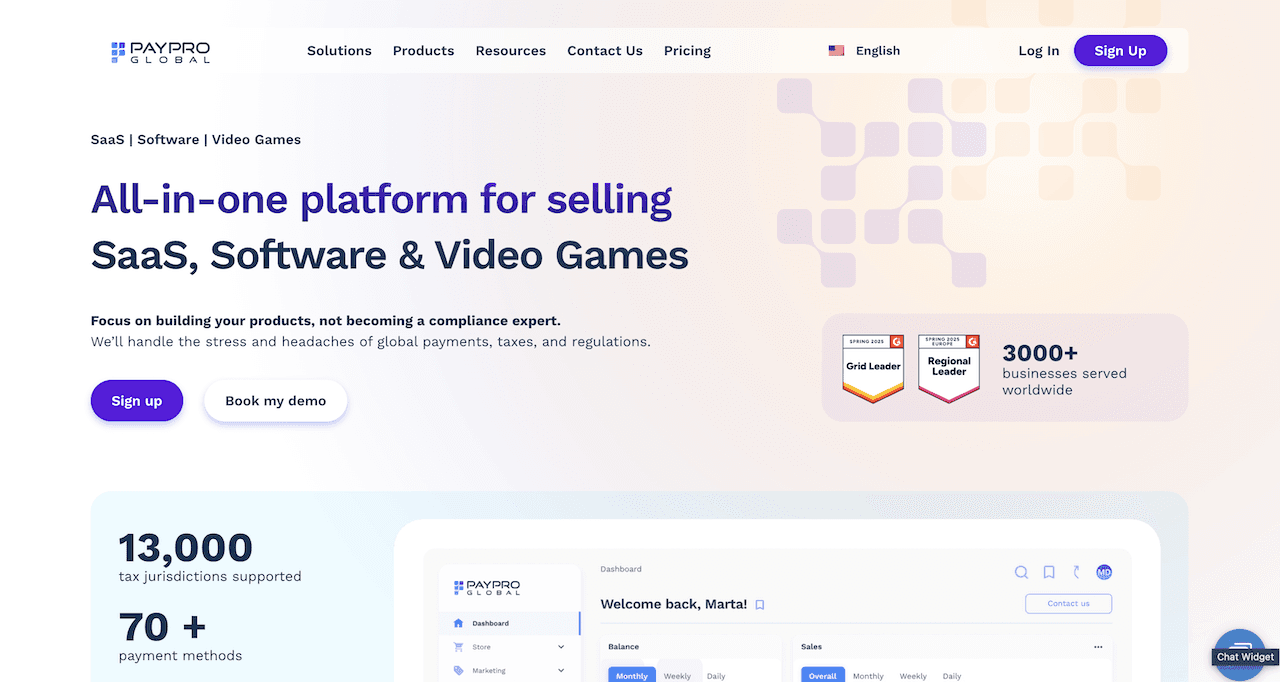
PayPro Global operates as a Merchant of Record, which means they legally take responsibility for your payments, tax collection, compliance, and fraud management. This is particularly useful for SaaS companies and digital product sellers who'd rather focus on building product than navigating international tax regulations.
Key Strengths
Full Merchant of Record service – PayPro Global handles sales tax, VAT, GST, and compliance across 190+ countries. They shield you from liability and administrative headaches.
Optimized for digital goods – The platform is purpose-built for selling software, online courses, eBooks, and other digital products with complex licensing or subscription models.
Global payment methods – Cards, PayPal, local wallets, regional payment options all through one integration.
Pros
Complete tax compliance offloading. No registering for VAT in every EU country or tracking U.S. sales tax thresholds.
Automated invoicing and financial reporting that keeps your bookkeeping clean
Fraud protection and chargeback management included in the service
Cons
Higher processing fees (typically 5-9% of transaction value). You're paying for compliance coverage and liability protection.
Limited use case. This works great for digital goods and SaaS. Physical products or complex fulfillment? Not the right fit.
Best Suited For
SMB to mid-market SaaS companies and digital product creators selling globally. If you want to simplify tax compliance and ensure legal coverage without building an in-house team, a Merchant of Record handles it for you.
Paypal
Website: paypal.com
Company Overview
A behemoth in the payments space, PayPal needs little introduction. It's less a direct Stripe replacement and more of a necessary supplement or primary solution for B2C businesses. Its key advantage is its massive, trusted user base and the one-click checkout experience that drives higher conversion.
Key Strengths
Merchant of Record option – Similar to PayPro Global, can act as your MoR to handle tax, compliance, and fraud liability. Or you can opt for a traditional merchant account if you prefer.
Localized checkout experience – Supports 45+ payment methods and 87 currencies with geo-targeted pricing and language options. This cuts down cart abandonment from international customers.
Subscription & monetization tools – Recurring billing, coupons, upsells, affiliate management all built into the platform.
Pros
Extremely fast setup for standard checkout buttons.
High conversion rates, especially in B2C eCommerce, due to brand trust and saved payment methods.
Offers a full suite beyond processing: business debit cards, loans, etc.
Cons
Notorious for account holds and freezes, similar to other PayFacs. Customer service can be difficult to reach.
Higher fees for certain transactions (like chargebacks) and complex fee structures.
Primarily a B2C tool; less ideal for complex B2B invoicing or subscription models.
Best Suited For
Virtually any B2C eCommerce business that needs to offer a trusted, high-converting payment method. It's often used alongside a primary processor like Stripe to capture the "I-only-pay-with-PayPal" segment.
Braintree
Website: braintreepayments.com
Company Overview
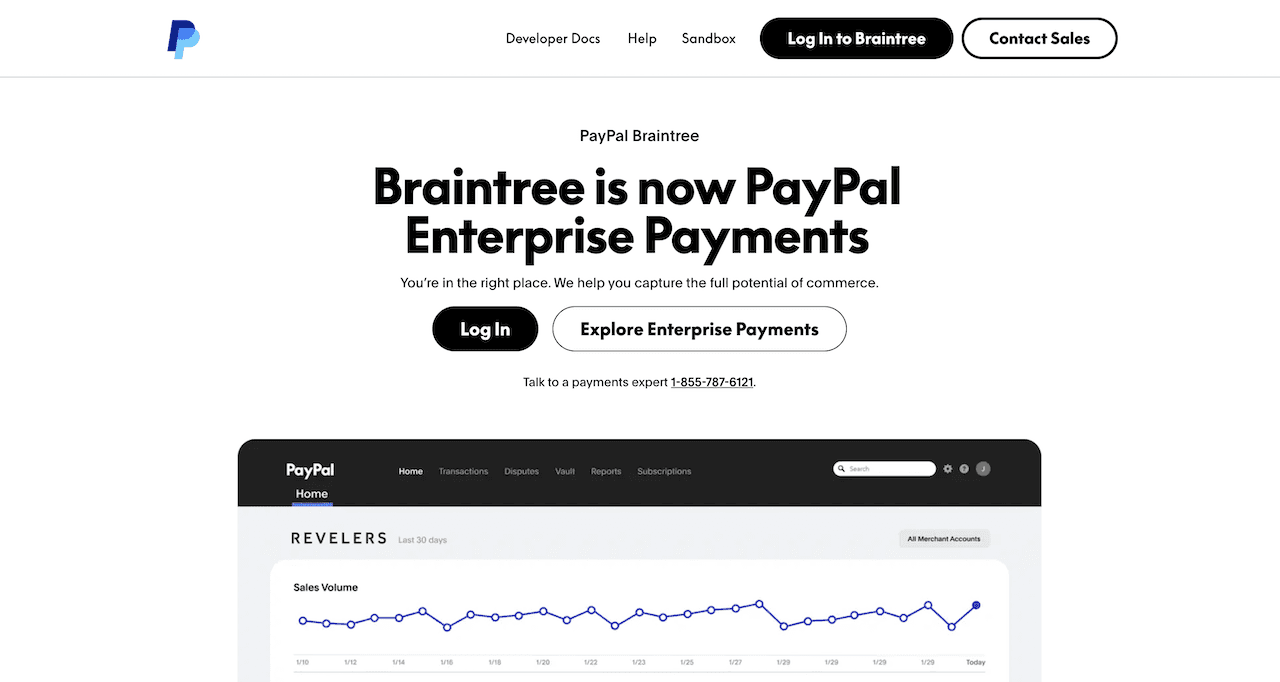
Braintree, owned by PayPal, focuses on online and mobile commerce with a special emphasis on marketplaces and platforms. If you need to split payments between multiple parties, Braintree has the infrastructure built in. Plus you get seamless access to PayPal, Venmo, and various local payment methods alongside traditional card processing.
Key Strengths
PayPal ecosystem integration – Accept PayPal, Venmo, and credit cards through one integration. You're tapping into the trust and convenience of PayPal's massive user base.
Marketplace & platform features – Built-in support for split payments, escrow, and multi-party transactions. Good for gig economy apps, rental platforms, anything with multiple sellers.
Developer-friendly – Clean APIs, SDKs for major programming languages, thorough documentation. Your engineering team won't hate the integration process.
Pros
Transparent pricing: 2.59% + $0.49 for PayPal/Venmo and cards in the U.S.
Vault functionality for secure storage of payment methods and tokenization for recurring billing
Strong fraud protection tools (Kount integration available)
Cons
PayFac model like Stripe. You're on an aggregate merchant account with limited control.
Similar industry restrictions to other PayFacs. High-risk businesses often get declined.
Less emphasis on advanced features like invoicing, tax automation, or sophisticated global expansion tools
Best Suited For
Marketplaces, platforms, and mobile-first businesses that want to offer PayPal/Venmo alongside card payments. If you're building a two-sided marketplace (think Airbnb or gig economy model), Braintree's split payment capabilities and PayPal's trust factor give you real advantages.
PaymentCloud
Website: paymentcloudinc.com
Company Overview
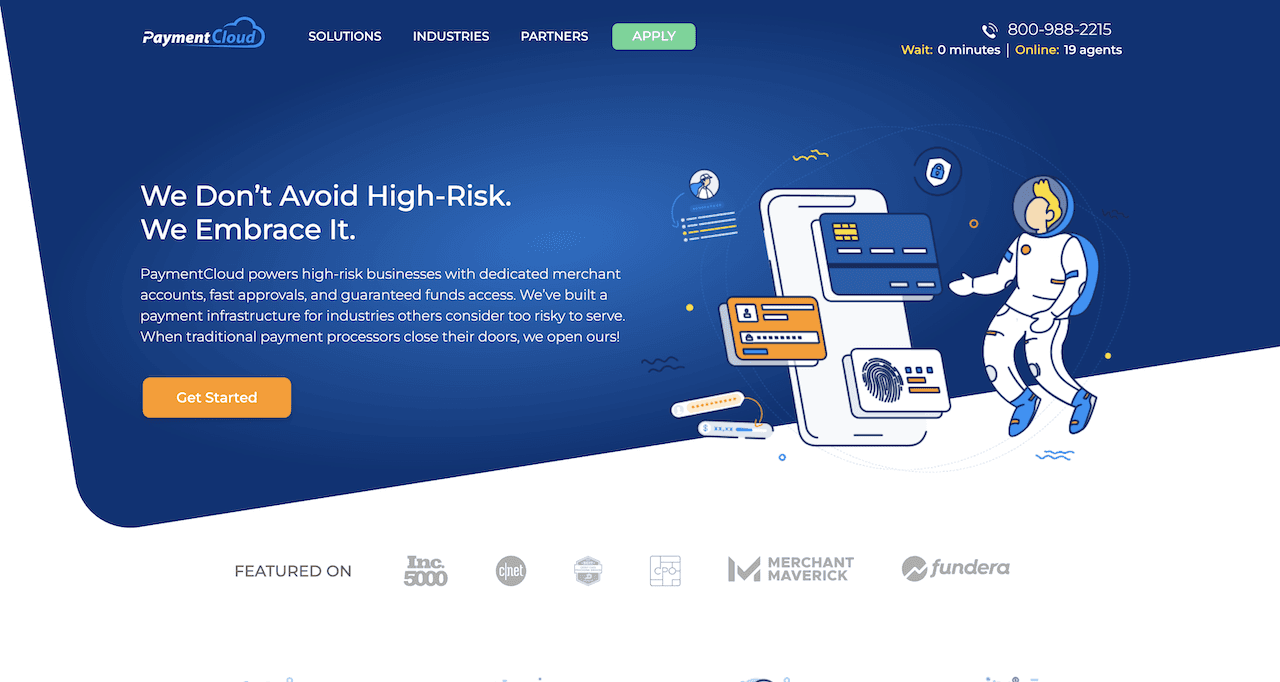
PaymentCloud specializes in merchant accounts for businesses that don’t fit the standard risk profile. Instead of relying on a single underwriting model, they work with multiple acquiring banks. This gives them flexibility to place businesses that typically struggle with automated PayFac approvals, especially if the product category, billing model or chargeback risk is higher than average.
Key Strengths
High-risk friendly underwriting support. PaymentCloud regularly works with industries that struggle to get approved elsewhere including travel, supplements, digital goods, and recurring billing programs.
Flexible gateway compatibility including options like Authorize.net and NMI, which gives businesses more control over setup.
Chargeback support and fraud tools that help keep accounts stable and processing uninterrupted.
Pros
Approval available for many industries labeled medium or high risk
Hands-on onboarding and support through underwriting
Access to fraud tools and chargeback alerts
Cons
No instant signup because underwriting is required
Pricing varies depending on risk level, business model, and processing history
Best Suited For
Businesses operating in restricted, subscription, travel, dropshipping or digital product categories that need a real merchant account and better approval odds. PaymentCloud is a strong option for merchants who have been declined or limited by PayFac processors.
Conclusion
Stripe is a solid payment solution but may not be the right fit for all businesses. If you're facing challenges with high-risk industries, global growth, or needing more control over your payments, platforms like Sensapay, Adyen, and PaymentCloud might be a better option. It's important to choose the right platform based on your business needs and goals.
Erick Tu
Author